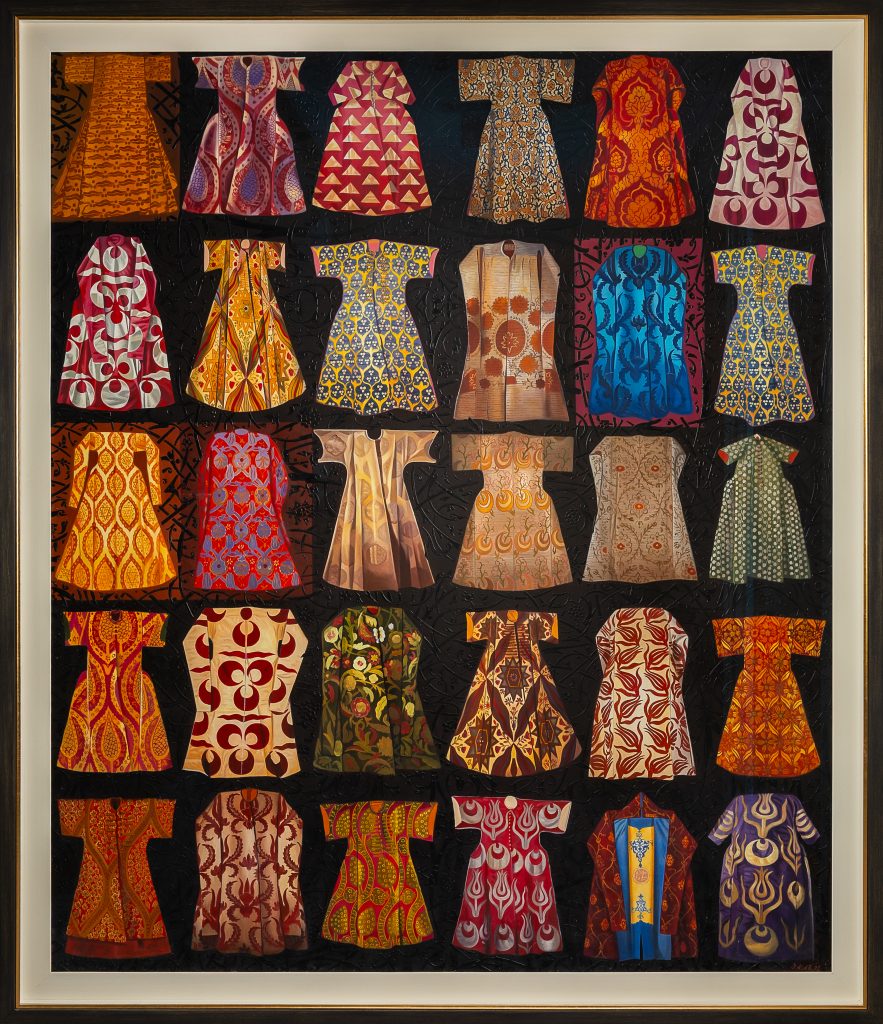
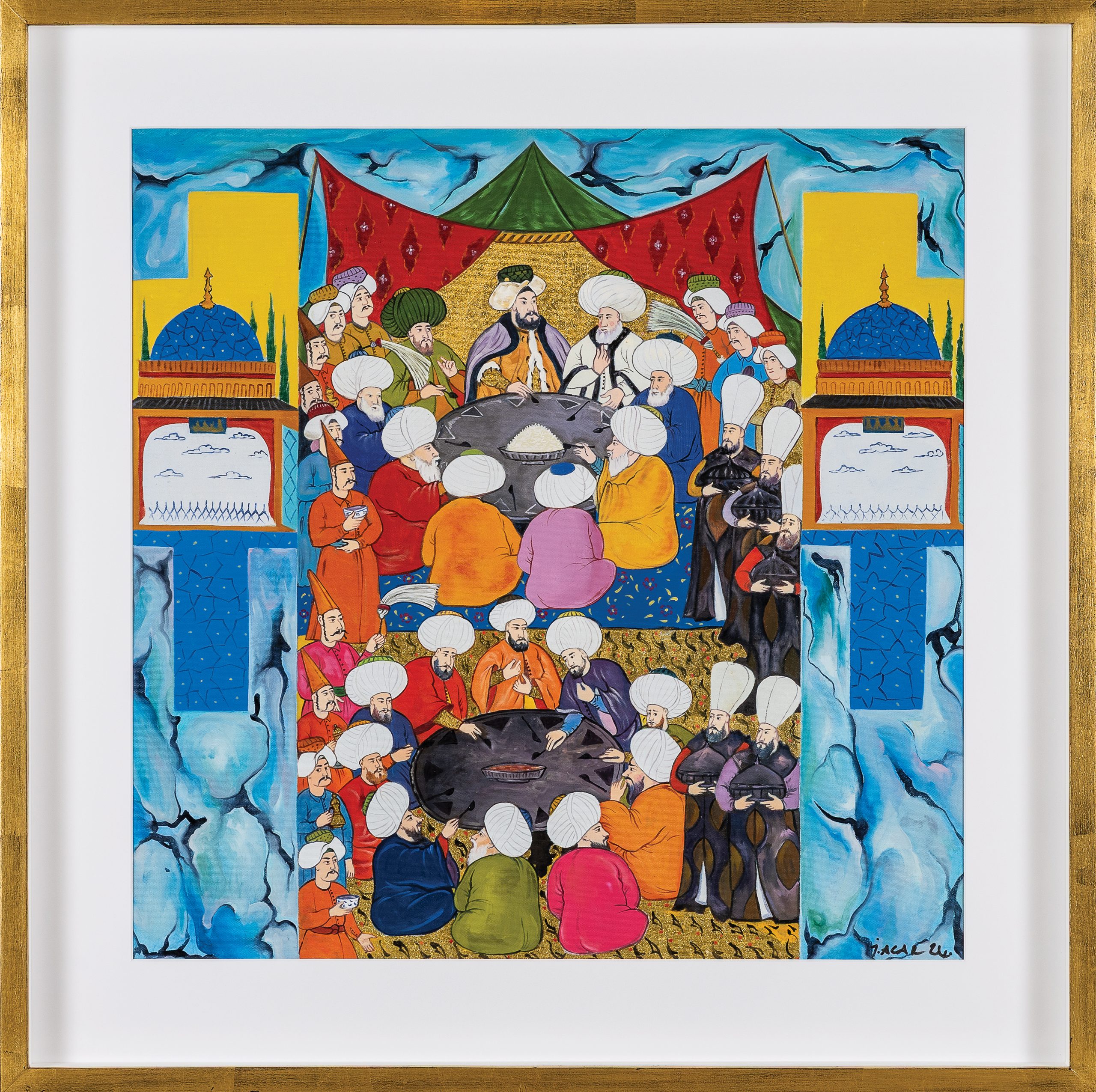
Sultans’ kaftans are not merely garments; they are silent witnesses carrying the spirit, power, and the most refined expression of art upon their fabric. Woven from precious textiles such as atlas, velvet, kemha, çatma, and seraser, and adorned with golden embroidery, these kaftans symbolize the grandeur of the palace, the elegance of Ottoman aesthetics, and the continuity of the state.
Listen to the artwork in English.
Eseri Türkçe dinleyin.
Read More
The kaftan transcends the body of the sultan, transforming into a symbol of the empire itself. During ceremonies, it reveals not only splendor but also the visual testament of Ottoman art through patterns crafted with the precision of calligraphy. Colors, embroideries, and textures speak of their owner’s rank, identity, and destiny.
Today, the kaftans displayed in Topkapı Palace are silent relics of the magnificence that once flowed through the reign of the empire. They echo forgotten victories, grand ceremonies, and diplomatic encounters.
This work is a significant piece from artist İsmail Acar’s Kaftans Series, inspired by Ottoman kaftans dating from the 16th to the 19th centuries and transferred onto canvas with great finesse. In Turkish culture, the kaftan is not merely attire, but a poetic symbol of aesthetic memory and cultural identity, etched into the passage of time.
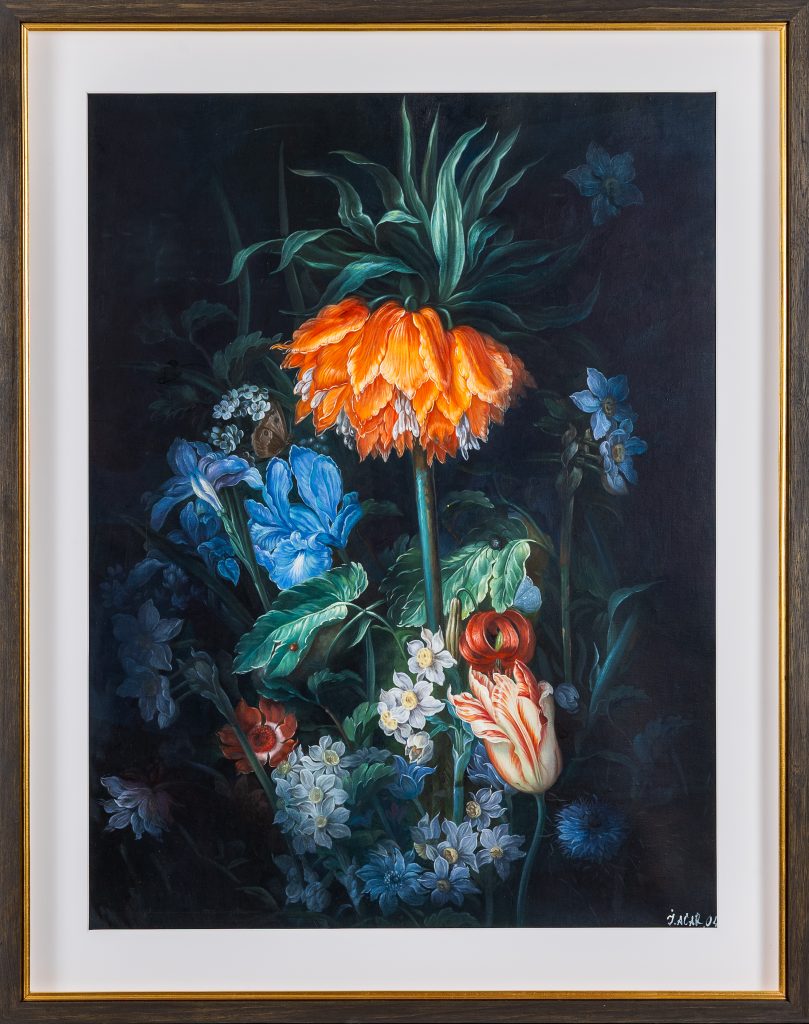
Inverted Tulip (Weeping Bride)
In Turkish folk culture, the inverted tulip is a symbol of sorrow, modesty, and legendary love. According to tradition, it represents the tears of the Virgin Mary, which is why its stem bends downward and drops of water fall from the tips of its leaves
Read More
In Anatolia, it is called the “sorrowful flower,” the “flower of grief,” or the “weeping bride.” In Turkish-Islamic art and folk motifs, the inverted tulip often stands for a broken heart or the pain felt after the loss of a beloved.
It grows naturally in Eastern and Southeastern Anatolia, with Hakkâri, Van, Bitlis, and Muş considered its native lands. It can also be found in provinces such as Adıyaman, Diyarbakır, and Tunceli. Türkiye is one of the regions in the world where this plant is most abundantly seen.
Listen to the artwork in English.
Eseri Türkçe dinleyin.
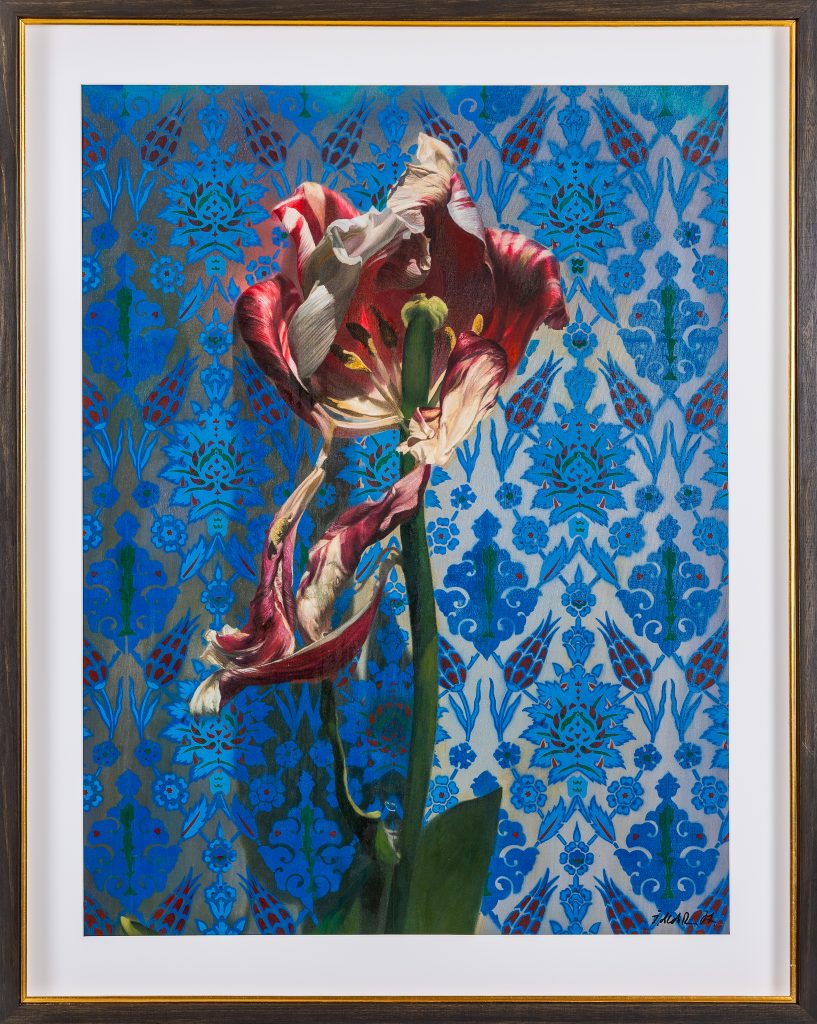
Blue Tiled tulip
Tile embodies the earth’s patience before fire; the tulip speaks of nature’s heart blooming with love. One is the embroidery of eternity, the other the grace of mortality. While tile seals infinity in blue, the tulip sanctifies the moment in red. When they come together, time becomes both stone and flower.
Written in Arabic letters, the word tulip (ﻟﺎﻟﻪ) carries the same letters as Allah (ﺍﻟﻠﻪ).
Read More
Thus, the tulip has been regarded as a sign reminding of divine unity. Its upright stance symbolizes the servant’s submission before God, while its slightly bowed neck reflects humility. In Ottoman tiles and calligraphy, the tulip motif is not merely an ornament but also a symbol of Sufi depth: an ancient secret where the embroidery of eternity meets the delicacy of transience.